

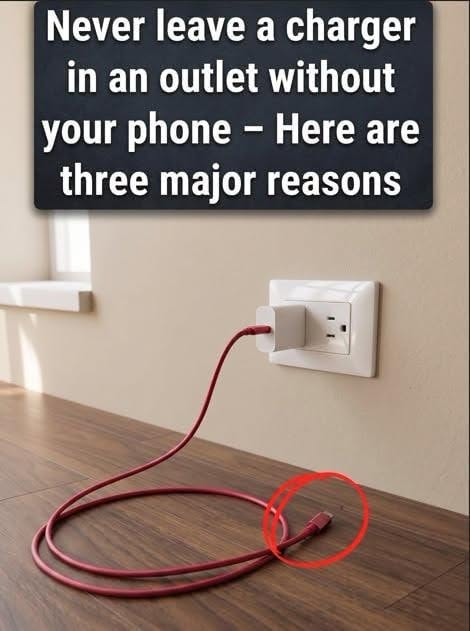
Why You Should Never Leave a Charger in an Outlet Without Your Phone
You unplug your phone in a hurry, toss it into your pocket, and leave the charger sitting in the wall. It seems harmless—after all, your phone isn’t even connected anymore.
But here’s the thing: a charger that’s plugged into an outlet can still use electricity, generate a small amount of heat, and remain exposed to electrical problems even when it isn’t charging your phone.
That doesn’t mean every plugged-in charger is an immediate fire hazard. Modern, reputable chargers are designed with safety protections and typically use very little power when they’re sitting idle.
Still, unplugging a charger when you don’t need it is a simple habit that can reduce unnecessary energy use and eliminate one more piece of electrical equipment from your home when it isn’t being used.
And honestly? It takes about two seconds.
So, let’s talk about what really happens when you leave a charger plugged in without your phone—and when you should be especially careful.
Why You Should Unplug Your Charger
A charger may look completely inactive when nothing is connected to it, but internally, its electronic components can remain energized as long as it’s plugged into the wall.
That means it isn’t truly “off.”
It Can Still Draw Electricity
When a charger remains plugged in, it may consume a tiny amount of electricity even when it isn’t charging a device. This is sometimes called standby power or phantom power.
For one phone charger, the amount is usually very small. You probably won’t see a dramatic change in your electricity bill from one charger alone.
But think about how many small electronics are plugged in around your home.
Chargers. TVs. Computers. Speakers. Kitchen appliances. Game consoles.
Those little amounts can add up.
Unplugging chargers that aren’t needed is an easy way to avoid wasting energy unnecessarily.
The Charger Can Still Produce Heat
Electrical components can produce some heat while energized.
A quality charger should be able to handle normal standby operation safely, but heat becomes more concerning when a charger is damaged, poorly made, covered by fabric, placed in a poorly ventilated area, or exposed to other electrical problems.
That’s why you shouldn’t tuck a plugged-in charger under a pillow, blanket, rug, or pile of clothing.
Even when it isn’t charging anything, give the charger room to breathe.
Not All Chargers Are Created Equal