

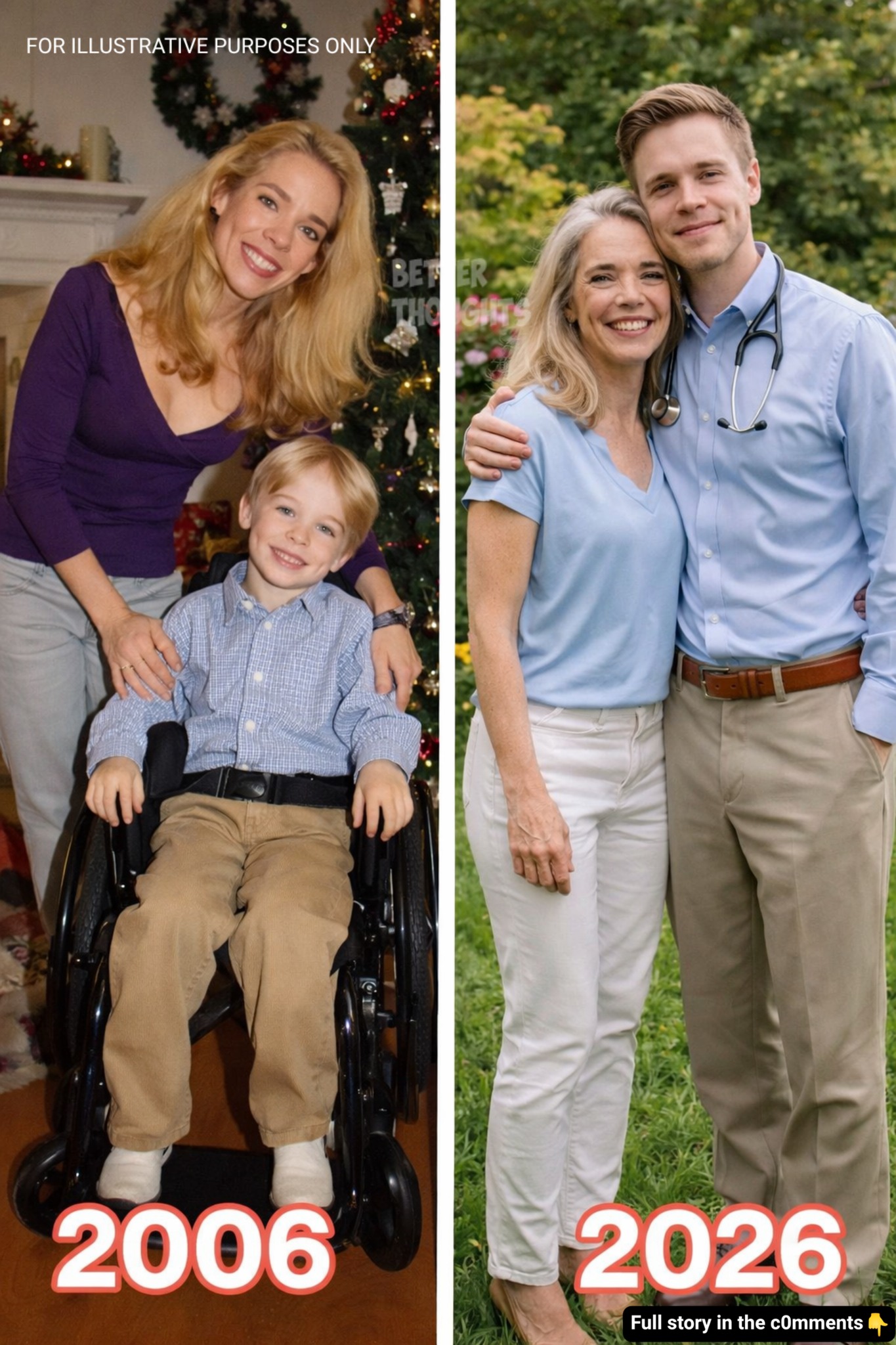
The nurse touched my shoulder. The doctor said something I didn’t hear.
I looked down at my son.
“Well, sweet boy,” I whispered, “I guess it’s just you and me now.”
He blinked—like he’d expected nothing else.
Two days later, I signed the discharge papers alone.
I listened to instructions alone.
Watched other women leave with flowers, balloons, husbands carrying bags.
I walked out with a sleeping baby, a thick folder of medical papers, and a nurse named Carla beside me.
“You got someone meeting you?” she asked.
I smiled tightly. “Eventually.”
That lie lasted about a year.
My apartment smelled like formula, baby powder, and lemon cleaner.
I cleaned when I was scared—which meant I cleaned constantly.
Those years weren’t noble.
They were exhausting. Expensive. Relentless.
I learned to stretch Henry’s legs while he cried and my hands shook from lack of sleep. I learned how to fight insurance companies. At church, people spoke to me in voices meant for funerals.
One Sunday, when Henry was six months old, I was adjusting his braces when a woman asked quietly:
“And Warren… is he coping?”
I smoothed Henry’s sock.
“No,” I said. “He left before my stitches even healed.”
She didn’t know what to say.
Henry sneezed.
I kissed his forehead. “Can you pass me the sign-in sheet? My hands are full.”
By the time Henry started school, he already had a gaze too sharp for adults who preferred easy children.
At seven, sitting in an office beside me, the assistant principal said:
“We just want to be realistic. We don’t want Henry frustrated in a class that might move too fast.”
Henry looked at her calmly.
“Do you mean physically,” he asked, “or because you think I’m stupid?”
She blinked. “That’s not what I said.”
“No,” he replied. “But it’s what you meant, isn’t it?”
I pressed my lips together to keep from laughing.
In the car, I tried to correct him.
“You can’t talk to school staff like that.”
“Why not?” he asked. “She was wrong.”
I met his eyes in the mirror—sharp, stubborn, entirely mine.
“That,” I admitted, “is a very strong argument.”
Physical therapy became the place where his frustration turned into strength.
By ten, he knew more about his condition than most doctors.
Once, a resident read from his chart:
“Delayed motor response on the left side.”
Henry frowned. “I’m right here. You can just ask me.”
“How does it feel?” the resident asked.
“Annoying. Tight. And like people keep talking about me instead of to me.”
I laughed. He was going to be just fine.
At fifteen, he sat at the kitchen table reading medical journals.
“What are you reading?” I asked.
“A bad article,” he said. “It forgot there’s a person attached to the chart.”
At sixteen, after a difficult walk, he leaned against the counter, breathing hard.
“I’m tired,” he said. “Of people treating me like a warning story. I was born like this. That’s it.”
I turned off the faucet. “Then what do you want to be?”
He looked at me.
“Someone in medicine. The person who talks to the patient—not about them.”
He got into medical school. Top of his class.
A few days before graduation, I found him sitting unusually still.
“What’s wrong?”
He looked up.
“Dad called.”
The past rushed back all at once.
“How?”
“He found me online.”
“What did he want?”
Henry gave a small, almost amused smile.
“He said he’s proud of me.”
The bitterness that came out of me surprised even myself.
“He wants to come to graduation,” Henry added.
“No.”
“I invited him.”
I stared. “Why?”
“Because I don’t want him living with the wrong version of this story.”
Graduation night arrived in a blur of lights and applause.
Then Warren walked in.
Twenty-five years older. Gray at the edges. Still carrying that same confidence that assumed he belonged.
“Bella,” he said.
“Warren.”
He turned to Henry, his eyes drifting briefly to his legs.
“Son,” he said.
“Good evening,” Henry replied calmly.
Warren forced a smile.
“You’ve done well. No wheelchair. No cane. You don’t even limp.”
Henry only said, “Is that so?”
Before anything else could be said, Henry’s name was called.
He squeezed my hand. “You okay, Mom?”
“I am now,” he said.
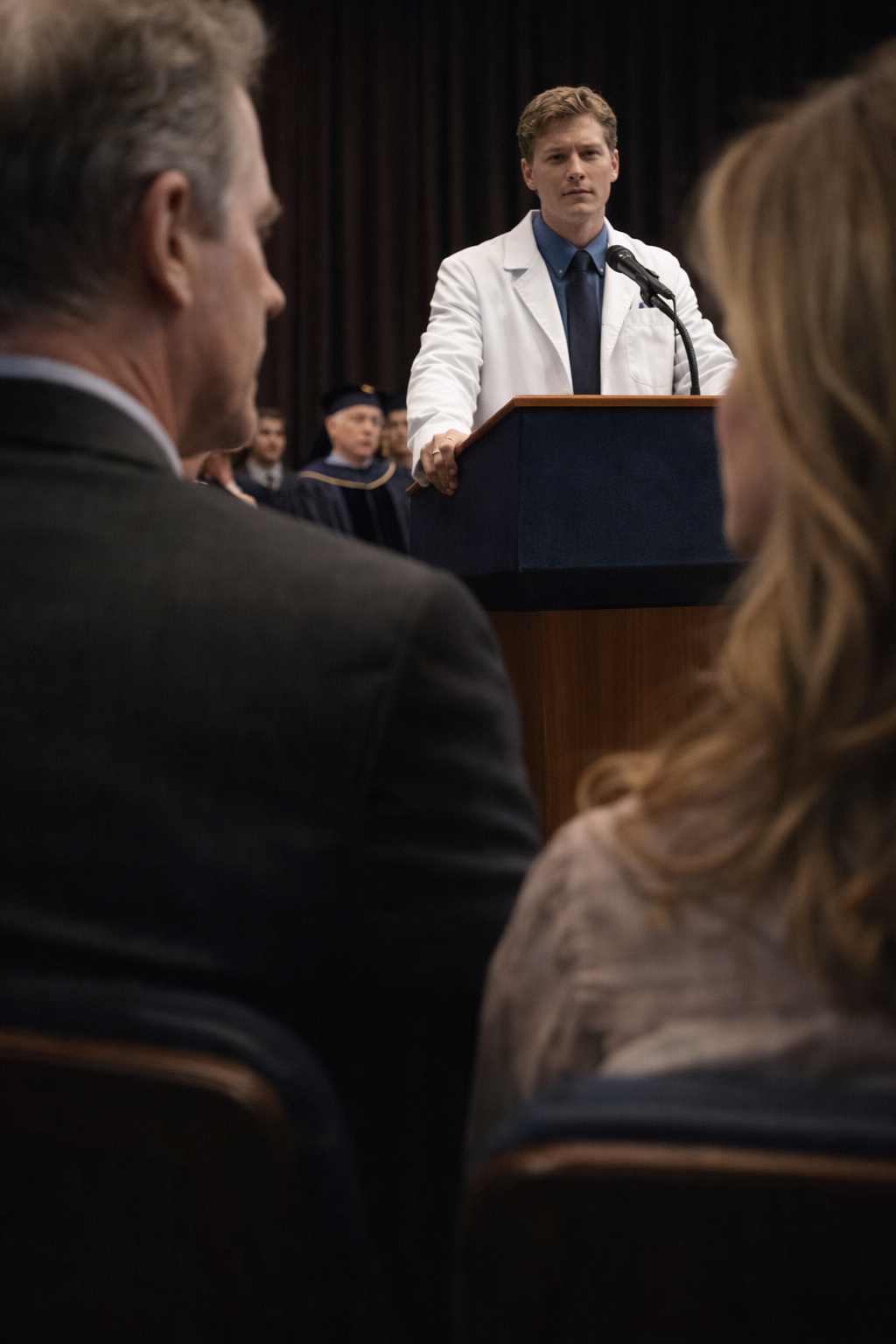
He walked to the podium—with a slight limp Warren had completely missed.
The room applauded as he stepped forward.
“People like stories like this,” Henry began. “They see the white coat and think this is about perseverance—mine.”
A few quiet laughs.
Then he found me in the crowd.
“But I’m not here because I was born brave. I’m here because my mother was.”
CONTINUE READING...>>
To see the full instructions for this recipe, go to the next page or click the open button (>) and don't forget to share it with your friends on Facebook.