Baby Oil Locks Moisture Into Dry Hair Before It Breaks

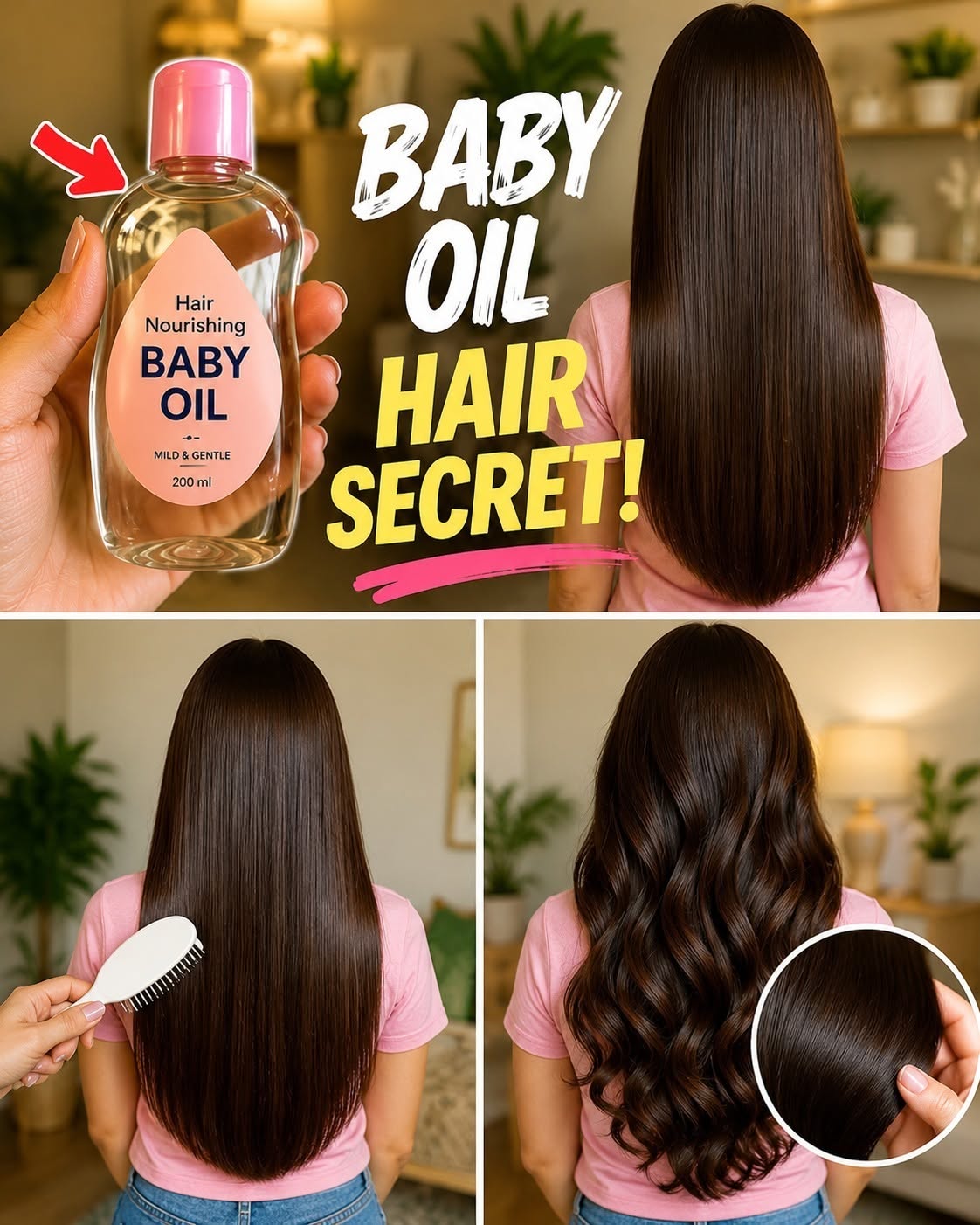
Baby oil forces that cuticle to lie flatter, like pressing down rough roof tiles after a windstorm. The result is a hot river of smoothness sliding over the strand instead of moisture bursting outward like steam from a cracked lid.
The first thing people notice is not dramatic length. It’s the feel. Fingers glide instead of stalling. The brush stops fighting back. The hair starts moving like one piece instead of a thousand dry threads arguing with each other.
But that’s not even the part that matters most. Underneath the shine, something more useful is happening where breakage usually begins…
Continued on next page:
Think about an old leather belt. Once it dries out, every bend leaves a mark, and every pull makes the weak spots louder. Hair does the same thing when it’s starved of a seal. It bends, rubs, and frays at the weakest points until the ends start snapping off in tiny, invisible losses.
That’s why so many people think their hair “won’t grow.” It is growing. It’s just breaking off as fast as it appears. And nobody built a giant ad campaign around a few dollars’ worth of oil that can calm that nightly abrasion. It’s not because it doesn’t work — it’s because it doesn’t pay.
Now the real question becomes: where do you put it so it helps instead of turning the head into a greasy mess?
Why the Ends Transform First — And the Scalp Gets Weighed Down

The ends are the oldest part of the strand. They’ve survived the most heat, the most brushing, the most rubbing against shirts, pillows, and towels. That’s why they show damage first and benefit first.
Baby oil acts like a slick buffer on those vulnerable lengths, lowering the grind between fibers so the hair stops sawing itself apart every time you sleep or style it. The sound changes too — less rough scrape, less dry rustle, more glide.
That tiny change in friction is the difference between hair that keeps shedding its strength and hair that finally holds together.
Continued on next page: