

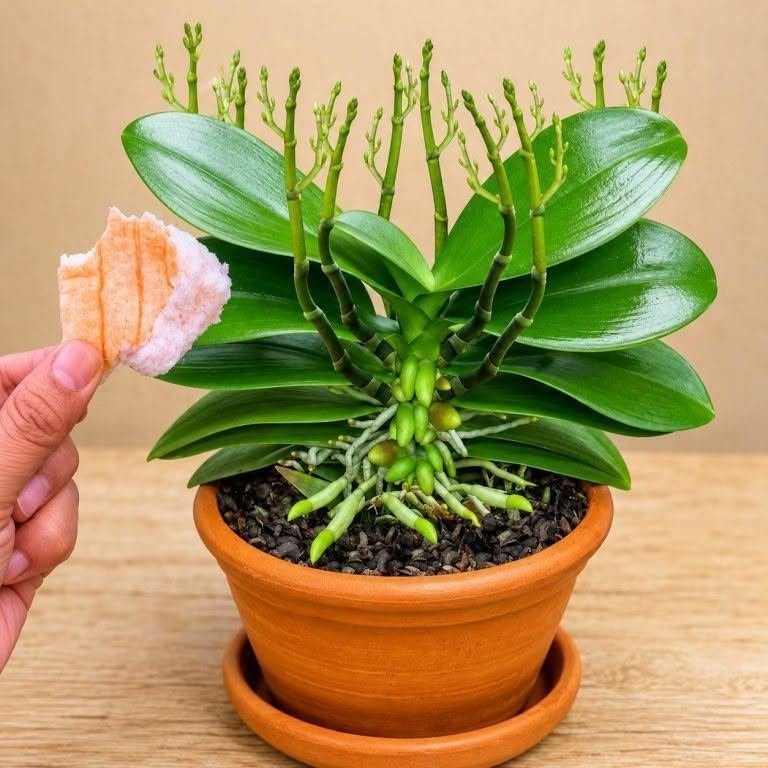
Very dark-green leaves may indicate insufficient light
Medium-green leaves are often a better sign
Yellow-green, reddish-edged, or bleached leaves can indicate that the light is too strong
Water According to the Plant’s Needs — Not the Calendar
Discover more
Explore Gourmet Recipes
Choose Cookware Sets
Grab Quick Bites
There is no rule saying that every orchid should receive exactly the same amount of water every week.
How quickly the bark dries depends on factors such as:
Temperature
Humidity
Pot size
Number of roots
Age of the bark
Season
Water when the growing medium has begun to dry, but avoid both constant moisture and prolonged extreme dryness.
A transparent inner potodors
Fungus gnats or other small insects
Breakdown of the growing medium
Uneven nutrient availability
A much more controlled alternative is a finished orchid fertilizer used at a weak concentration according to the instructions.
The University of Maryland recommends light fertilization during active growth and also warns against overfertilization, since excessive nutrition can encourage strong leaf growth at the expense of flowering.
The viral shortcuts may sound tempting, but the real factors behind reblooming are much more practical—and they start with giving your orchid the right environment.
What Actually Makes an Orchid Bloom?
For Phalaenopsis, there are several factors that are significantly more important than any viral gardening trick.
The Right Light Is One of the Most Important Factors
Moth orchids need plenty of light, but usually not strong direct midday sunlight.
A bright east- or west-facing window often works well. A location that is too dark can result inlarge, dark-green leaves but few or no new flower spikes.
The University of Maryland describes insufficient light as a common reason for a lack of reblooming, while Iowa State Extension also identifies inadequate light as one of the main reasons orchids fail to flower again.
The leaves can provide a useful clue:
Very dark-green leaves may indicate insufficient light
Medium-green leaves are often a better sign
Yellow-green, reddish-edged, or bleached leaves can indicate that the light is too strong
Water According to the Plant’s Needs — Not the Calendar
Discover more
Explore Gourmet Recipes
Choose Cookware Sets
Grab Quick Bites
There is no rule saying that every orchid should receive exactly the same amount of water every week.
How quickly the bark dries depends on factors such as:
Temperature
Humidity
Pot size
Number of roots
Age of the bark
Season
Water when the growing medium has begun to dry, but avoid both constant moisture and prolonged extreme dryness.
A transparent inner pot