
Benefits:
- Less snoring
- Reduce sleep apnea
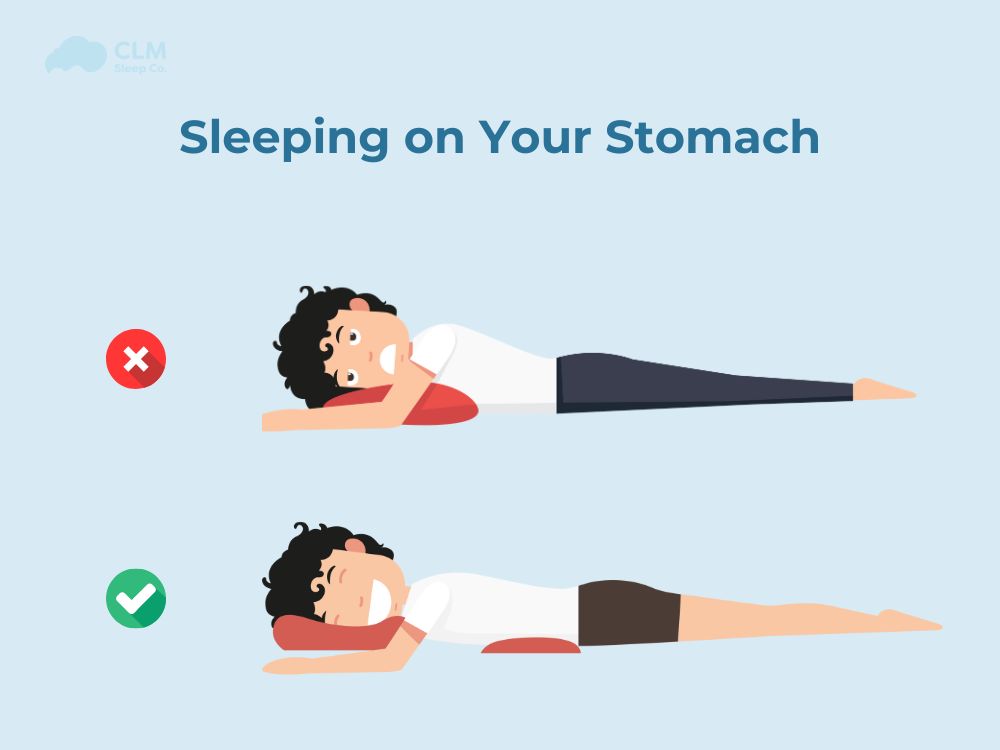
Drawbacks:
- Create significant pressure on the neck and spine.
- Back pain, neck pain, and muscle tension
- Creating pressure on the chest causes difficulty breathing.
- Create wrinkles and cause aging of the face and neck
Essentially, stomach sleeping is the worst sleeping position because it adds strain on the neck and spine; it can also make using the CPAP a lot more difficult.
Best Sleeping Position for Common Conditions
Sleep position plays a huge role in the management of medical conditions, including back pain, snoring, and sleep apnea.
Best Position for Back Pain
People with chronic back pain should sleep in a neutral spine position to minimize discomfort.
- Sleeping on the back with a pillow placed under the knees helps preserve the spine’s natural curve and ensures even weight distribution.
- Alternatively, sleeping on the side with a pillow between the knees reduces stress on the lower back and keeps the hips properly aligned.
Best Position for Sleep Apnea and Snoring
For individuals with sleep apnea and severe snoring, sleeping on the back can worsen these conditions, as it causes the tongue and soft palate to fall backward, obstructing the airway.
- Sleeping on the side is generally recommended to help keep the airway open and minimize snoring and obstructive sleep apnea treatment
- Adopting the fetal position or reclining on the back with slight elevation, especially when using an adjustable bed, can also improve airflow and alleviate symptoms.
Tips for Improving Your Sleep Position
CONTINUE READING...>>
To see the full instructions for this recipe, go to the next page or click the open button (>) and don't forget to share it with your friends on Facebook.