
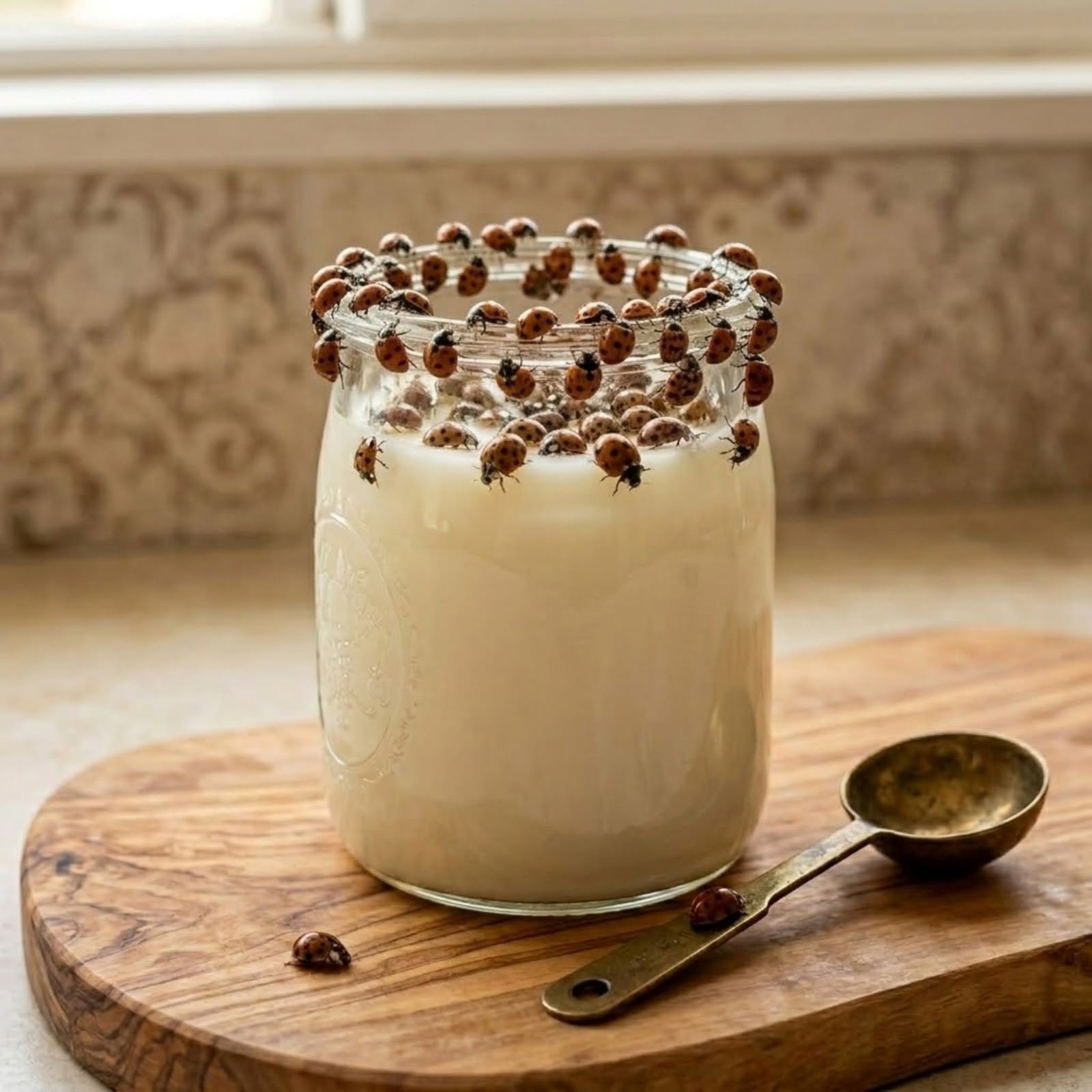
While they look remarkably similar to native ladybugs (sharing the same red/orange color and black spots), their behavior is vastly different. Asian Lady Beetles are notorious for being aggressive household pests. Here is why Autumn accurately described them as “evil” and “stinky”:
They Bite: Unlike native ladybugs, Asian Lady Beetles have a tendency to bite humans and pets. While not highly dangerous, the bite feels like a sharp pinch and can cause allergic skin reactions in some people.
The Foul Odor: As a defense mechanism, when these beetles feel threatened or are squished, they secrete a foul-smelling, yellowish fluid from their leg joints (a process called “reflex bleeding”). This liquid smells terrible—often compared to rotting leaves or dirty gym socks—and it permanently stains walls, curtains, and furniture.
Massive Swarms: They don’t invade in ones and twos. When they find a suitable environment, they release pheromones that attract thousands of other beetles to the exact same location.
Why Are They Taking Over Houses?
Asian Lady Beetles are infamous for a behavior called “overwintering.” As the weather turns cold in the late fall, these insects instinctively seek out warm, sheltered places to hibernate for the winter.
Unfortunately for us, human houses are the perfect temperature. They swarm the sunny, light-colored sides of buildings and squeeze their way inside through tiny cracks in windows, doors, and siding. Once inside, they cluster together in the hundreds or thousands, crawling across ceilings, clustering in light fixtures, and driving homeowners crazy.
The Secret Behind the Viral Trap
Autumn noted that the jar had only been sitting out for two days and had already captured an enormous amount of bugs. So, what exactly is in that cloudy water?
The viral “hack” shown in the picture relies on a very simple, yet highly scientific, homemade concoction: Water, a few drops of dish soap, and a light source (or something sweet).
Here is why it works so flawlessly:
The Attraction: Asian Lady Beetles are heavily drawn to light and warmth. Homeowners usually place these jars near a sunny window or place a small desk lamp shining directly over the jar. Some variations of the trap also include a splash of vinegar or a spoonful of sugar in the water to act as an aromatic bait.
The Lethal Soap: The cloudy appearance of the water in the photo comes from dish soap. This is the absolute most critical ingredient. Normally, a bug as small as a lady beetle is light enough to walk right across the surface of a puddle of water due to “surface tension.” However, liquid dish soap chemically breaks the surface tension of the water.
No Escape: When the beetle lands on the soapy water, the surface tension instantly gives way. Instead of floating, the bug is immediately pulled under. Furthermore, the soap coats their bodies and blocks their spiracles (the tiny holes they use to breathe), ensuring they cannot climb the slippery glass to get out.
How to Make Your Own Asian Lady Beetle Trap
If your home has been invaded by these stinky pests, you can easily replicate Autumn’s success with items currently in your kitchen:
Step 1: Grab an empty glass jar (like a mason jar or an old spaghetti sauce jar).
Step 2: Fill it about halfway with warm water.
Step 3: Add a generous squirt of liquid dish soap (Dawn or any standard brand works perfectly). Stir it gently—you want the soapy mixture, but try to avoid creating a massive mound of bubbles at the top.
Step 4 (Optional): Add a teaspoon of sugar or a splash of apple cider vinegar to give off an enticing scent.
Step 5: Place the jar in the area where you see the heaviest bug traffic—usually on a sunny windowsill, a bathroom counter (as seen in the photo), or near a warm lamp.
The Bottom Line
Seeing your house overrun by swarms of biting, foul-smelling beetles is enough to make anyone panic. But as this viral image proves, you don’t need to resort to expensive, toxic chemical sprays inside your home. A simple jar of soapy water uses the bugs’ own biology against them, offering a cheap, non-toxic, and highly satisfying way to take your house back!
🔥 Continu