
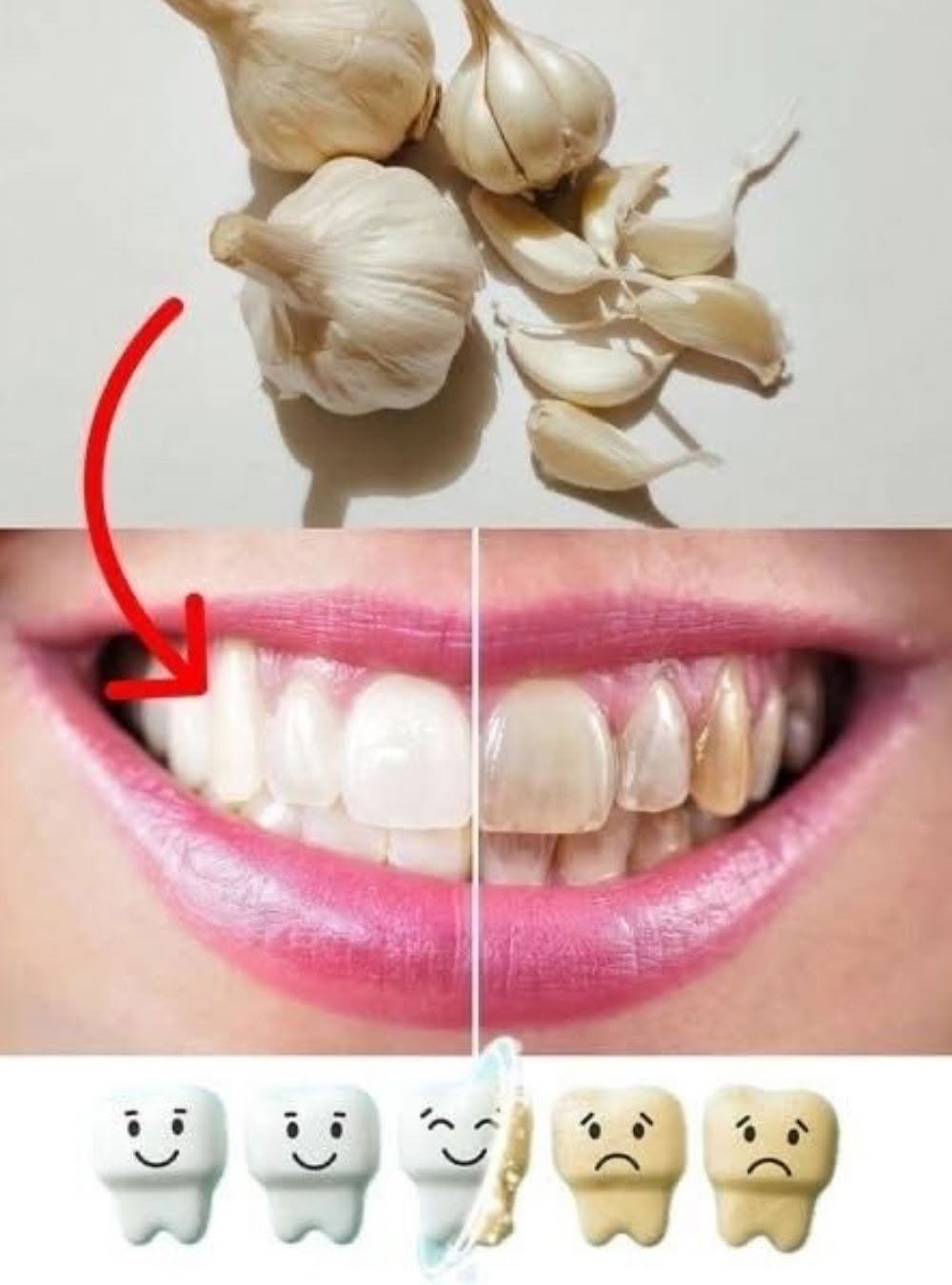
Some people prepare a simple garlic paste by crushing a fresh clove and applying a very small amount to the teeth or gum line for a short time—usually no more than one to two minutes—before rinsing thoroughly. A pinch of salt is sometimes added, both to soften the strong taste and to provide a very mild abrasive effect.
Others prefer a gentler method, creating a garlic rinse by steeping minced garlic in warm (not hot) water for a few minutes, straining it, and swishing briefly before rinsing with plain water.
Because garlic’s aroma is famously persistent, many follow up by chewing fresh parsley or mint, or rinsing with water mixed with a small amount of apple cider vinegar to neutralize odors.
Important things to know first
Garlic is strong. For people with sensitive gums, exposed roots, or existing dental issues, it can cause irritation. Testing a very small amount—or avoiding direct application altogether—is essential. And it should never replace brushing, flossing, or professional dental care.
This is also where expectations matter.
Garlic may help reduce oral bacteria and support gum health, but it cannot remove hardened tartar once it has formed, and it won’t replace professional whitening treatments. Any “whitening” effect people notice usually comes from cleaner surfaces, not actual bleaching of tooth enamel.
The bottom line
Used carefully and occasionally, garlic may support oral hygiene by helping control bacteria—but it’s a supplement to good habits, not a shortcut. Brushing twice daily, flossing, and regular dental visits remain essential.
Sometimes the most interesting health conversations start with familiar ingredients—but knowing their limits is just as important as knowing their potential.