
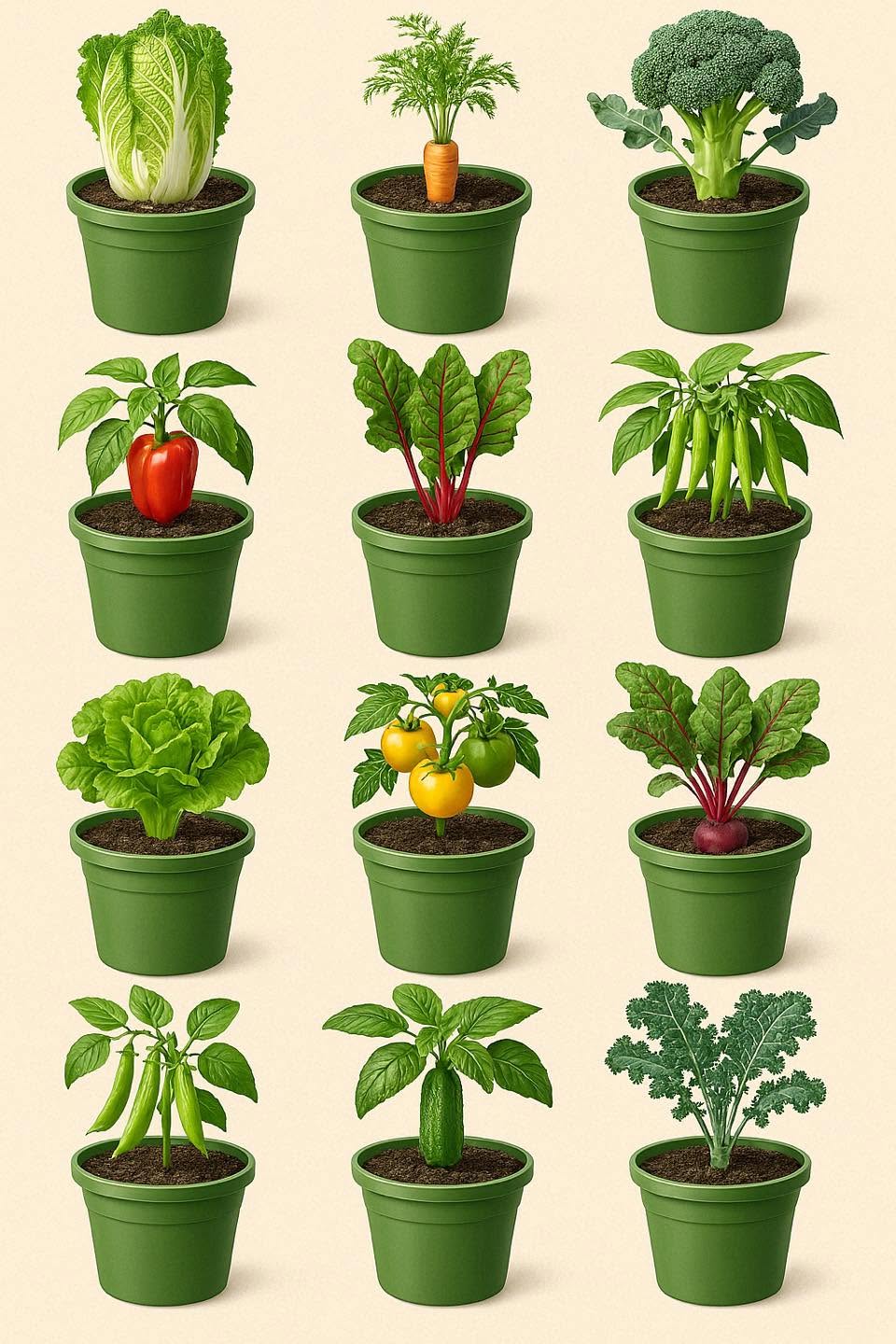
Not everyone has access to a large backyard or garden plot, but that shouldn’t stop you from growing your own food.
With a few buckets, some high-quality soil, and a sunny space, you can cultivate a productive vegetable garden right on your patio, balcony, rooftop, or driveway.
Bucket gardening, particularly using 5-gallon containers, is a low-cost, space-saving solution for anyone wanting to enjoy the benefits of homegrown produce.
Buckets are the perfect vessel for growing a wide variety of vegetables. They’re portable, easy to maintain, and help conserve water.
Plus, by managing your own soil, you significantly reduce the risk of weeds, pests, and soil-borne diseases.
If you’re ready to transform your small space into a thriving edible garden, here are the 15 best vegetables to grow in buckets, along with growing tips, spacing recommendations, and ways to maximize your yield.
1. Tomatoes
Tomatoes are one of the most popular and satisfying vegetables to grow in containers. Their deep roots and tall growth habit make them ideal candidates for bucket growing.
To get the best results, use determinate (bush) varieties like ‘Bush Early Girl’ or ‘Roma’ for limited space, or go for indeterminate types like ‘Sungold’ or ‘Beefsteak’ if you have vertical support.
Ensure your bucket has drainage holes, use a well-aerated potting mix rich in compost, and place the container in full sun for at least 6–8 hours daily.
Insert a tomato cage or stake early to support the plant as it grows. Water deeply and regularly, and feed with a balanced fertilizer or tomato-specific blend to support fruiting.
2. Peppers
Peppers, including bell peppers and hot chili varieties, are compact plants that thrive in 5-gallon buckets. They love warmth and sunlight, so choose a sunny location where they can get at least 6 hours of direct light.
Start with seedlings or germinate seeds indoors. Fill the bucket with nutrient-rich potting soil, and add compost or organic fertilizer to promote flowering and fruit development.
Keep the soil moist but never soggy, and stake the plant if fruits begin to weigh down the branches. Try varieties like ‘California Wonder’, ‘Banana Pepper’, or ‘Jalapeño’ for container-friendly growth.
3. Cucumbers
Cucumbers can be surprisingly prolific when grown in buckets, especially when you choose compact or bush varieties such as ‘Spacemaster’ or ‘Bush Champion’. These types stay small but still produce plenty of cucumbers.
Cucumbers need consistent watering, especially during hot weather, and prefer rich, loamy soil. Install a small trellis or tomato cage to support vertical growth.
Keep the bucket in full sun, and harvest cucumbers frequently to encourage continued production.
4. Lettuce
Lettuce is perfect for container growing and can be harvested in as little as 30 days. Loose-leaf varieties like ‘Buttercrunch’, ‘Red Sails’, or ‘Black Seeded Simpson’ allow you to harvest individual leaves multiple times from the same plant.
You can fit 4–6 lettuce plants in one bucket. Since lettuce has shallow roots, you don’t need overly deep containers, but you should ensure good drainage and moisture retention.
Place buckets in a location with morning sun and afternoon shade, especially in hot climates, to prevent bolting.
5. Spinach
Spinach thrives in cool weather and grows beautifully in containers. It grows best in early spring and fall, when temperatures are below 75°F. Like lettuce, it has shallow roots and does well in a 5-gallon bucket.
Choose varieties like ‘Bloomsdale Long Standing’ or ‘Tyee’. Sow seeds directly into the soil, and thin seedlings to allow at least 3 inches of space per plant.
Keep soil evenly moist and harvest outer leaves regularly for continuous growth.
6. Radishes
Radishes are fast growers and can be ready for harvest in just 25–30 days. Because they’re small and have minimal root depth, you can grow a dozen or more in a single bucket.
Use loose, well-draining soil to allow roots to develop freely. Plant seeds about 1 inch apart and thin once germinated.
For best flavor and texture, harvest as soon as they reach maturity. Try varieties like ‘Cherry Belle’, ‘French Breakfast’, or ‘White Icicle’.
7. Carrots
next